Friday, August 19, 2016

Using a Dialect in Dialogue

"Dialogue...dialect. What's the difference?" (I have actually had students who confuse these two words.) Believe me, there is a BIG difference! Let's take a look at the definitions:

      dialogue: conversations between/among characters
      dialect: a variety of a language

According to dictionary.com: dialect is a variety of a language that is distinguished from other varieties of the same language by features of phonology, grammar, and vocabulary and by its use by a group of speakers who are set off from others geographically or socially.

When used properly a dialect can help build character, plus it reveals “who” might be talking.

Dialect can be drawn from an existing one, or the author can create a new one. In Janet Beasley’s Hidden Earth Series, Volume 1, Maycly the Trilogy, Book 1, Two Altered Worlds you'll find a brand new dialect. There are characters called "chukkons" on the world of Maycly who have their own way of talking. Though it is an unknown dialect, the author has left enough of the “real word” so readers can follow along easily and still get a feel for how a chukkon talks. You’ll notice that the narrative is in plain English while the dialogue carries the dialect.

Charleo laughed. “Here be yer taggerts, me friend. Ye shouldna be a-takin’ me so serious.” A few of the others in the Pipe Shoppe who knew Charleo could be heard giggling at that remark. “Now let’s see:  one, two, three, four, and five.”
“What be this? Ye dunna trust yer old pal Charleo? Countin’ in front of me. Shame, shame.”
“Sorry. Just force of habit there. No hard feelin’s?”
“None be taken. I was only a-pullin’ yer leg. Now I s’pose I’ll be a-needin’ some pipe stuffin’s ta smoke in this wonderful pipe.” Charleo ran his fingers over the pipe stuffing jars. “How about...umm ...this one. I’ll be a-havin’ me a laund of the ‘E’er So Sweet’.”
“Ooooo, tis one of me favorites.” Jobi inhaled deeply with every scoop until he had dished out a laund on the scale, and he added a pinch more.
“How much be I owin’ ye fer it?”
“Ah, nothin’.”
“I’ll be a-givin’ ye somethin’ fer it, ye crazy wee fella.”
“No arguin’ now. Yer first pipe stuffin's be on me.”
Charleo realized there was no budging Jobi. “I’ll be sure and make a point of showin’ yer fine piece of work ta everyone. And I be a-thankin’ ye from the bottom of me heart.” Charleo gave a nod and a wink to Jobi.
“And ye be welcome from the top of mine.”

Wednesday, August 17, 2016

From the Nose of Our Kayak: Chapter 12 "It's Not a Crime in Test Paddle a Yak"

Hello and welcome to the JLB Creatives Blog, where you'll find an array of creative features from a hand-picked group of creative geniuses. 

Wednesdays on the JLB Creatives Blog are set aside for our blog book, "From the Nose of Our Kayak." JLB Creatives CEO, Janet Beasley, and her husband, Don, have been kayaking for nearly 10 years. Together they are excited to share with you, their awesome experiences that they have encountered. In this Wednesday feature you'll find kayaking stories, scenic nature photography from their outings, and some helpful tips when it comes to maneuvering your "butt sleds" (aka kayaks) on your journeys.

So if this is a topic that interests you, you'll want to be sure and become a follower of the JLB Creatives Blog, and stop in on Wednesdays each week for the latest chapter in Don & Janet Beasley's adventure blog book, "From the Nose of Our Kayak." 


Previous chapters can be found in our blog archives. We began the series on June 1, 2016.

-----------

From the Nose of Our Kayak
Don & Janet Beasley
Chapter 12: "It's Not a Crime to Test Paddle a Yak"

One day in May 2011 Don and I decided to do something off the cuff. We had been hearing about fiberglass kayaks and wanted to see (and feel) the difference for ourselves. So it was off to the gulf coast of Florida we went. 

We decided to make it a day trip and enjoy our time seeing sights we don't normally see both to and from our destination. We love taking the back roads and getting "lost" in the moment of some of the most scenic roads on the planet.

We arrived and were elated to find 2 fiberglass kayaks we could test paddle. We can't describe the excitement we had doing a lot of "firsts" on this trip. Our first first was entering a kayak from a dock. We had always entered at the edge of the water, so learning the entry from a dock was really quite cool! 

To best describe this task we have turned to Alex in the KayakDave.com YouTube video to show you a few different techniques of entering and exiting your kayak from a dock...take it away Alex!


Don and I both entered the kayaks with ease. These techniques are some great "aces in your back pocket" for sure.

Our next first was feeling the difference under our bums of just how much smoother a ride a fiberglass kayak delivers. With big smiles on our faces we picked up the pace and headed out of the small channel and into the Crystal River.


It was love at first sight! The noses of our kayaks "kissed" and we knew it was going to be a good day.  

It wasn't long before we both noticed how differently our kayaks were paddling without a rudder. It took some getting used to, but we mastered it and continued enjoying the test paddle.

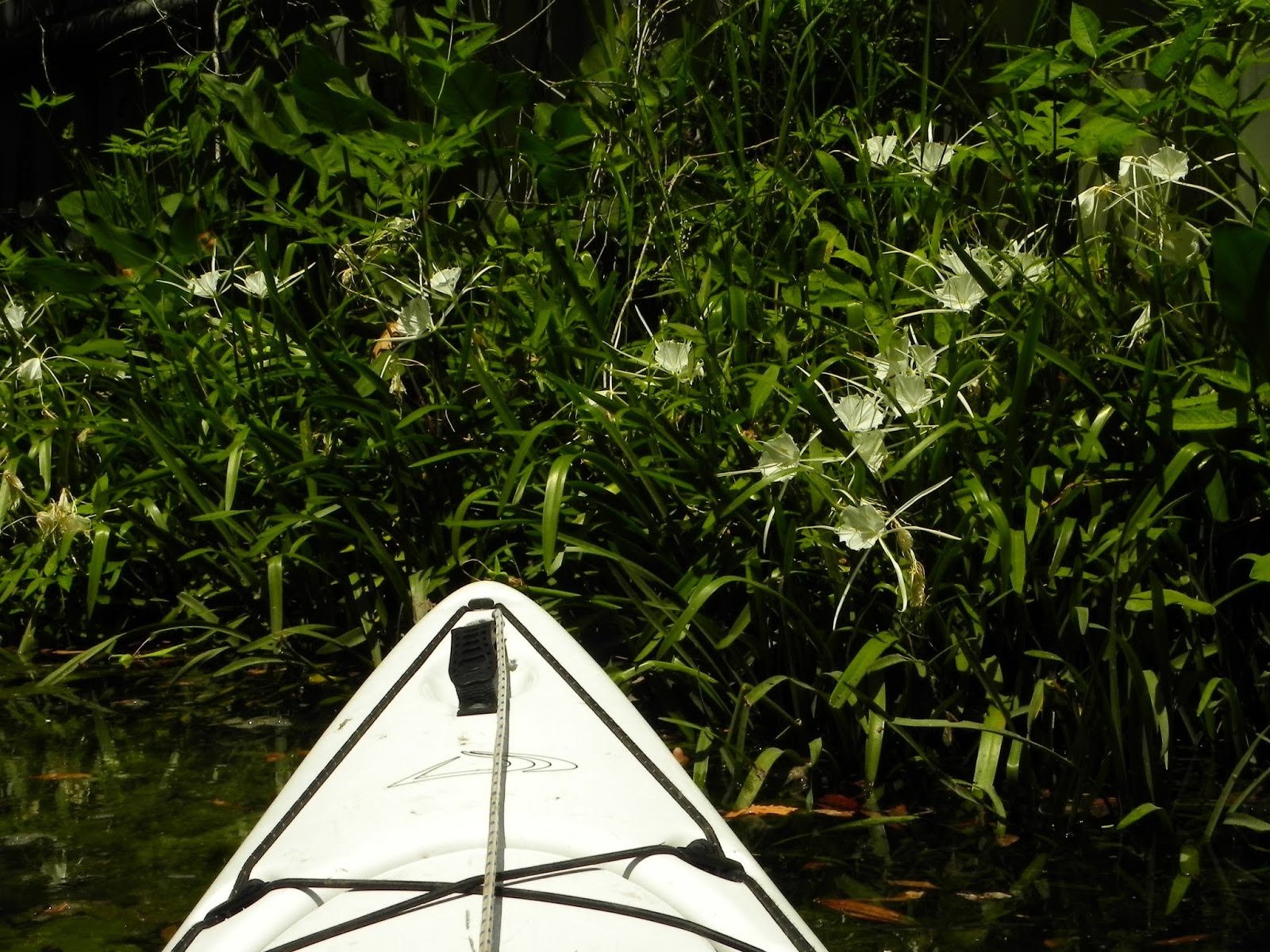
Another first for us was having the privilege of discovering spider lilies. It was a thrill to paddle right up to them along the shoreline and snap a few photos.


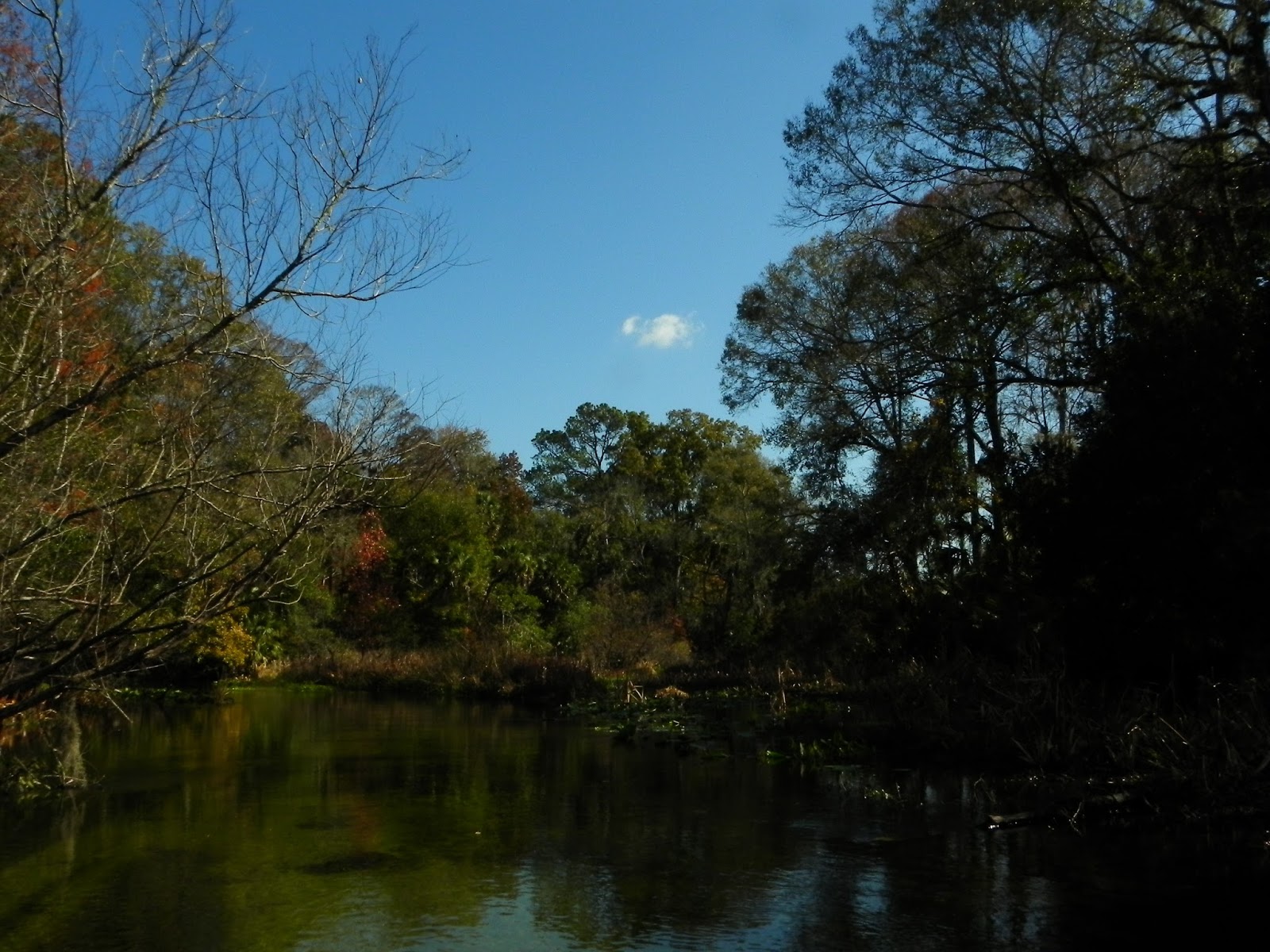
Dipping our hands in the cool clear water as we glided along, seeing a manatee, and discovering new territory for the first time made it a delightful hour well spent while we were...shall we say...testing the water? 

We returned to the dock, and utilized the handy dock-exit technique only to find ourselves popping right out and up on the dock in no time. 

When we left we both knew a #WildernessSystems fiberglass tandem kayak would be added to our manual "yacht" collection in the future...we just didn't know how distant in the future it would actually be.

----------------------------------

Kayak Tip of the Week: Be eager to learn something new when it comes to kayak techniques. You never know when one of those techniques may come in handy...or possibly even a life saver!


--------------------------------------------------------------------------------------------------------------


Don Kayaking on Crystal River
Janet Kayaking on Crystal River
Don Holding Onto Janet's Kayak for a Quick Pic

Janet enjoying the refreshing feel of the water thru her fingers

From the Nose of Janet's Kayak: Spider Lilies

Spider Lilies

Manatee in Crystal River


Monday, August 15, 2016

Excerpt Extravaganza! Today's Excerpt Is From "The Untold Legend - The Warrior Queen"

Welcome to the JLB Creatives Blog, where an eclectic team of creative geniuses share their fantastical imaginations. 

On Mondays we are featuring an excerpt from one of our creative authors. And what makes this feature so fun is that we publish a wide range of genres. You'll never know what to expect for the excerpt.

To read all of our Monday excerpts thus far, we invite you to visit our blog archives and look for our first Excerpt Extravaganza! that began on Monday August 1, 2016.

Enjoy!

All previous excerpts are available in our archives. We began this series on August 1, 2016.


Today's excerpt is from NIEA Winner author Amy I. Long's adult fantasy novel The Untold Legend - The Warrior Queen. 

Days passed, and not one person said a word about the disappearance of my sister. One night I went to my chamber early. Father burst through my doors carrying his sword.

“You I will kill this night for taking my only daughter away. The servants who searched this hall have found Deira’s body. You will pay!” he shouted, stepping closer.

“If you wish to fight me, let it be tomorrow,” I said. 

“No, you will die this night!” he screamed. 

“But would you not want everyone to watch my death?” I calmly questioned. 

“No, this is a private matter,” he said sternly. 

Knowing my father was a poor swordsman, I tried to put the matter off. When he raised his sword to me, I did defend myself. “You cannot win,” I said, blocking every blow. I even tried my old trick of stripping him of clothes. I cut them off, and still he fought on. “Go away,” I yelled. 

I got no response; he just fought on. With all my strength, I drew back my sword and then brought it forward to block his blow. I attempted to break his sword in half. It stayed in one piece. But because of the force of the blow it fell to the floor. I dropped to my knees and grabbed it. Backing up, I faced my naked father. A sword now in each hand, I held them both up, twirled them around, and then brought them both forward and crossed them in front of me, never once removing my eyes from him. I wanted to prove that I was a better opponent than he thought me to be.


“You cannot win against me, not with my experience,” I said, returning my own sword back to my side. I held only his. 

“How did you ever get out of this room?” he asked while breathing heavily. 

“You helped her. You helped Deira attempt to kill me by locking me in my own room to starve,” I blurted at him. 

“How?” he asked again. 

“I jumped,” I yelled. Backing up a few steps, I lowered his sword down to rest at my side. After staring at me for a moment, he lunged across the floor, pulling back his fist. He tried to strike me, but I blocked it by bringing the sword forward to meet his fist. His hand met the smooth part, not the edge, but the blow to his knuckles made him double over in pain. 

I waited until he gained his composure. When he faced me, he grabbed my wrist in an attempt to make me drop the sword. Out of reflex, I took my other hand and placed it near his. Using my strength, I turned it, slicing his thigh. He instantly stepped back, releasing his hold. 

“Why fight, old man? You cannot win,” I said, watching him examine his wound.

---------------------

If you've been trying to decide if adult fantasy is a genre you want to dive into, we highly recommend our NIEA Winner, Amy I. Long's The Untold Legend to break into the genre. And if you're an established adult fantasy enthusiast you won't be disappointed to pick up this amazing tale of love and honor. To discover more about Amy or to purchase her novel visit Amy I. Long's author page on our JLB Creatives Publishing website.

Friday, August 12, 2016

Constructing a GOOD paragraph

A paragraph consists of several sentences grouped together, all of which discuss one topic. The first sentence in your paragraph is the topic sentence. It is the most general sentence in the paragraph and introduces an overall idea. It should suggest a question(s) in the reader’s mind and point your reader in the direction you are going; it does not provide any detailed information about the idea, It is usually the first sentence in the paragraph and should be indented. It can also make a reference to the preceding paragraph. The next sentences in a good paragraph are the supporting sentences, They should answer the question(s) suggested in the topic sentence and provide explanations (facts, details, examples) that support or explain the main idea expressed in the topic sentence. You can include as many sentences as necessary to accomplish the explanation. The concluding sentence summarizes the information presented within the paragraph. It is similar to, but not exactly the same as, the topic sentence.

A good paragraph includes four elements: unity, order, coherence, and completeness. To achieve unity you need to maintain one controlling idea (a single focus). This main idea is expressed in the topic sentence, detailed in the supporting sentences, and summarized in the concluding sentence.

Order can be cause & effect wherein a situation either causes or results from another, chronological or order of events in time, comparison/contrast or similarities and/or differences among things, emphatic, which means details are arranged in order of importance or for emphasis, and/or spatial, which is the discovery of how things are arranged in a space. Coherence is the element that makes a paragraph understandable. It uses logical bridges; in other words, the same idea is carried from one sentence to the next and successive sentences are constructed in parallel form. Verbal bridges can be used as well (e.g., pronouns refer to nouns in previous sentences, keywords are repeated in several sentences, synonymous words are repeated in several sentences, transition words link ideas from different sentences). Consistent verb use and point of view are maintained throughout. To achieve completeness you must maintain a single idea throughout the paragraph.

One of the most prominent questions when developing good paragraphs is, "When do I start a new paragraph?" The answer is simple: 1) when beginning a new idea, 2) to contrast ideas or information, or 3) when your reader needs a pause. Bear in mind that paragraph construction involves taking liberties when writing dialogue, and than's a whole other ball game. We'll cover that another time. 

Wednesday, August 10, 2016

From the Nose of Our Kayak: Chapter 11 "Kayaking & Dining & History"

Hello and welcome to the JLB Creatives Blog, where you'll find an array of creative features from a hand-picked group of creative geniuses. 

Wednesdays on the JLB Creatives Blog are set aside for our blog book, "From the Nose of Our Kayak." JLB Creatives CEO, Janet Beasley, and her husband, Don, have been kayaking for nearly 10 years. Together they are excited to share with you, their awesome experiences that they have encountered. In this Wednesday feature you'll find kayaking stories, scenic nature photography from their outings, and some helpful tips when it comes to maneuvering your "butt sleds" (aka kayaks) on your journeys.

So if this is a topic that interests you, you'll want to be sure and become a follower of the JLB Creatives Blog, and stop in on Wednesdays each week for the latest chapter in Don & Janet Beasley's adventure blog book, "From the Nose of Our Kayak." 


Previous chapters can be found in our blog archives. We began the series on June 1, 2016.


-----------


From the Nose of Our Kayak

Don & Janet Beasley
Chapter 11: Kayaking & Dining & History


Kayaking amidst the serenity of nature is truly our favorite, but sometimes we like to kayak over history to dinner!


In our "backyard" you'll find Little Lake Harris. The launching sight is about a mile from our house. Little Lake Harris is a beautiful body of fresh water in the central Florida area that is chock full of alligators, birds, and turtles, and dotted around its pristine shores are a few restaurants. It also offers up some of the best sunsets around.  Little Lake Harris stems from (the much bigger) Lake Harris which spans east and west from State Route 19 all the way over to the Leesburg, Florida area of State Route 27. The two lakes are divided by a long causeway/bridge on State Route 19 that dead ends into the magnificent Mission Inn. 

In the heat of summer here in Florida you can't always get out to kayak during the morning or daylight hours as often times storms are brewing, and we don't mess around with lightning in Florida (we are one of the lightning capitals of the world to say the least). But because the days are longer in the summer, on those rare evenings when the storms dissipate and the winds lie down, we love to head to the launching dock and paddle over history into the sunset for some dinner. Nestled in the sleepy town of Howey in the Hills, Florida, on the shoreline sits The Boondocks Restaurant. 


The launching dock we use rests on a piece of historical land. In 1925 a 1.5 mile long wooden bridge began at the launch site and stretched across to the town of Howey in the Hills. In 1949 the bridge had become deteriorated and was demolished upon completion of the State Route 19 bridge mentioned above. It's a really cool feeling to think about when you're kayaking over a piece of such historical content. You find yourself trying to imagine just how it was back then...the way of life, the citrus industry, the "booming" town of Astatula, and the kinds of vehicles and gutsy folks who would have braved the trek across the rickety slats from one town to the other. 


The photos to the right (and more) can be found at TownofAstatula.com  


When we arrived at The Boondocks in our trusty #WildernessSystems T145 "Mean Greenie" we feasted upon some really awesome seafood pasta, and enjoyed dining over the water with a view that's like none other. Oh, and we had dessert too!


Before the sun slipped out of sight we paddled back to our dock in Astatula, loaded up and headed back to the house. It had proven to be just the evening we had expected...calm, casual, and relaxing.

Sometimes kayaking is about the scenery, sometimes kayaking is about the adventure, sometimes kayaking is about immersing yourself in the history of an area, and sometimes kayaking is about the destination. Regardless of your motive, get out there, kayak, and discover a world from a different perspective.

----------------------------

Kayak Tip of the Week: If you're going to go kayaking in a new area be sure and talk to some of the locals about the history of the area. You never know when you might be paddling over something highly significant to not only that specific area but maybe even the nation's history.


Monday, August 8, 2016

Excerpt Extravaganza! Today's Excerpt Is From "Hidden Earth Series"

Welcome to the JLB Creatives Blog, where an eclectic team of creative geniuses share their fantastical imaginations. 

On Mondays we are featuring an excerpt from one of our creative authors. And what makes this feature so fun is that we publish a wide range of genres. You'll never know what to expect for the excerpt.

To read all of our excerpts thus far, we invite you to visit our blog archives and look for our first Excerpt Extravaganza! that began on August 1, 2016.

Enjoy!

All previous excerpts are available in our archives. We began this series on August 1, 2016.


Today's excerpt is from #1 best selling and 5 star author Janet Beasley's Hidden Earth Series: Volume 1 Maycly the Trilogy - Book 1 Two Altered Worlds

Bewildered, Iona cut loose again with her gift of chattering. “Let’s see…today I’ve seen a…a…gnome-like guy pop out of a cloud and leave a Dream Decanter on my nightstand. It spewed musical fog that my feet and legs are now dangling in causing my legs to heal. And let’s not forget the three-inch-long buzzing something…whose name, by the way, was apparently Jit? And he…she…I think it was a he…had a face like a human and wings like a dragonfly that he used to fly by my eyes leaving a trail of sparkles. Then he disappeared into the cloud with the little gnome guy…man…thing. I opened a magic letter signed by SUL, and now my birthmark is warm. Are you kidding me?” 
     She tried to put all of the recent events together. The poem on the card faded. It and the envelope burst into flames in her hand, making her jump. “Too weird. It didn’t burn me. Well, that was interesting.”
     She went silent, pondering to herself. I will never see this place again. Though it might have been guilt forcing these feelings, she wanted to believe she was truly thankful for the provisions she had received.
     “Yap! Yap! Yap! YOWLY-WOWEEE!” barked Wiskee.
     “Well, there’s another new noise from you. I guess you’re getting a little anxious? All I can say is, it’s a good thing you can’t talk because you’d chatter on more than me!” Iona calmed her small dog, Wiskee, with her touch. “OK. OK. I’m on it.”
     She brushed her hands together and resituated herself on the bed. She thought about her job—she was no longer going to be visiting those in need, and this troubled her.
     “I will see to it they are cared for.” Iona could not believe she was hearing what she thought was SUL’s audible voice again.
     She looked at Wiskee and whispered, “And we’ll never see our strange but lovable friend, Dumpster Man, again.” She had grown quite fond of him.
     With his nose, Wiskee pushed her hand toward the Dream Decanter, but she was still admiring the apartment. “Holy smokes! I can’t leave those!” She jumped from the bed and gathered the only remaining tangible memories of her family, their photos, and put them safely in the waistband of her pajama bottoms.

     She sat back down on the bed and clutched Wiskee under her arm without thinking. He made the noises to let her know she was holding him a little too tight.
     “Oh, I’m sorry little buddy.” She loosened her grip.
     Saying goodbye to her home was all too familiar and unpleasant. Iona closed her eyes and silently beckoned. Please let this be true. Please, SUL, I want to trust You with all my heart, and believe that You will take me to my family. She reached for the Dream Decanter, never letting Wiskee out of her grasp, and did just as the poem had instructed.

     Window shades dropped with a whoosh and a thud. Iona freaked and spoke from the pitch dark, “I didn’t know we had window shades.” All of the outside noises ceased; the silence was spooky.
     Guarding Wiskee with her life, she crossed her legs underneath her and felt the bed begin slowly turning and moving upward through the darkness. She was afraid of hitting the ceiling but was also afraid to jump because she did not know how high they really were. She reached high above her head and felt nothing. “STAY PUT WISKEE!” She hated to let go of him, but was concerned at their height. Carefully she stood on the bed but could not feel anything above them; she knew she could reach the ceiling if she stood on the bed. Frightened she sat back down and immediately grabbed Wiskee. If we’re floating in space, where are the stars? Where’s the moon? What are we…suspended in time?

     With her next breath she gagged. “What is that awful smell. Ack! That certainly isn’t roses! This can’t be right.” She saw what she thought was a fireball heading toward them. It came up fast from below and just missed the bed on its rapid ascent. Iona screamed. The fireball fizzled out high above their heads like a dud firework. She tossed the Dream Decanter to her pillow and scooted to the center of the bed, not letting Wiskee out of her tight grasp. She felt him trembling.

     She had always longed for adventure, but this was not exactly the adventure she had pictured in her mind. Somberly Iona spoke into the darkness, “What have I done?” 
-----------------------

If you are a lover of enchanted fantasy you'll want to get hooked on this series! "Maycly" the trilogy has been compared to "The Wizard of Oz," and landed ahead of the "Hunger Games" on amazon. Click here for Ebook  Click here for print book  Click here to watch the Hidden Earth Series books trailers


Friday, August 5, 2016

Cliffhanger

I'm sure you've heard the phrase, "leave them hanging!" And when it comes to your readers, that's a GREAT phrase to apply. Whether you're going from chapter to chapter or from volume one of a series to volume two, it's the best way to leave your readers wanting more. I have read books that I can't put down--probably you have, too--because I can't stand to be left hanging. I just HAVE to go on to that next chapter to see what happens. Likewise, when a good book leaves me wanting to read the next one in the series, I can hardly wait until that next one is released.

 If you want to keep your readers coming back for more, it's a good idea to implement the use of cliffhangers. What a fun word. It means exactly what it says: it's as if you have been left hanging on the edge of a cliff with no one around to help you, so you are forced to wait until another person comes along. Readers describe cliffhangers as "love-hate relationships;" they love the idea of wanting more, but they hate the idea of having to wait. That's what you, as an author, want to accomplish with your readers.

Let me give you an example: you have spent the entire book getting your protagonist to the place where he/she (and your reader) expects to find the antagonist. Your protag arrives at the spot only to find someone other than the antag who says, "Hello. I've been expecting you." And that's where you end the chapter...or the book! Now your reader is left to wonder who it is. Is it the antag? Is it someone else? Does the protag know this character? Has the person been sent by someone? Is he/she going to help the protag? Is he/she a cohort of the antag? Is it a relative? A friend? An enemy?

That's what a cliffhanger is all about.

On my deathbed I want my last words to be, "I hid a million dollars under the..." That would be the ultimate cliffhanger, wouldn't it?
 

Wednesday, August 3, 2016

From the Nose of Our Kayak: Chapter 10 "Canoe vs Kayak"


Hello and welcome to the JLB Creatives Blog, where you'll find an array of creative features from a hand-picked group of creative geniuses. 


Wednesdays on the JLB Creatives Blog are set aside for our blog book, "From the Nose of Our Kayak." JLB Creatives CEO, Janet Beasley, and her husband, Don, have been kayaking for nearly 10 years. Together they are excited to share with you, their awesome experiences that they have encountered. In this Wednesday feature you'll find kayaking stories, scenic nature photography from their outings, and some helpful tips when it comes to maneuvering your "butt sleds" (aka kayaks) on your journeys.

So if this is a topic that interests you, you'll want to be sure and become a follower of the JLB Creatives Blog, and stop in on Wednesdays each week for the latest chapter in Don & Janet Beasley's adventure blog book, "From the Nose of Our Kayak." 


Previous chapters can be found in our blog archives. We began the series on June 1, 2016.

-----------

From the Nose of Our Kayak
Don & Janet Beasley
Chapter 10: Canoe vs. Kayak

Being December in Florida brings some of the most beautiful weather in the nation. Nice cool, comfortable temperatures mixed with plenty of sunshine and bright blue skies. December, like November, is a continuation of an autumn feel in the air. 

Believe it or not, we dashed back to Rock Springs Run for one more run in 2010, and our visiting went family with us. At the time we didn't have but only one tandem kayak at the house in Florida, that being the Wilderness Systems T145 "Mean Greenie" as we like to call it.

That meant we needed to rent a vessel for our guests. The rental house didn't have any kayaks available at the time, so our company decided it was fine with them to tackle the river in a canoe. 

Even though a canoe and a kayak are similar, you'll find some differences. For starters each one has its own "look" about it. A canoe has an open bow and aft, meaning the front and back of the canoe come to a point (like a kayak) but there is no covering so to speak. A kayak lends itself to being more enclosed on the front and back, and even sometimes in the middle if it is a tandem kayak. 

Another difference is the seating. In a canoe the seats are "raised," sitting flush with the top rim. Usually canoe seats stem from side to side between the left and right rims of the boat with one seat in the front, one seat in the back and sometimes a seat in the middle. A kayak usually puts paddlers sitting "on the floor" of the vessel in a chair-like seat as opposed to a bench style found in canoes. There are also what are considered to be sit-on-top kayaks. The sit on top kayaks are a popular style sometimes used for fishing. 


Canoe paddles are "one ended," meaning that there is a paddle on one end, and some type of handle shape on the other. Kayak paddles boast blades on both ends. A canoe paddle can also be used as a make-shift rudder. Some kayaks, like ours, have a rudder installed and can be operated by pushing on right and left foot pegs attached to cables that steer the rudder.

A canoe is a real workhorse making it great for carrying tons of gear, supplies, and even the dog! Kayaks aren't known for their "roominess" though gear can be carried on top of the nose and tail by strapping it down with bungee style cording, or in handy (though small) lidded compartments on some kayaks.  

Depending on who you talk to, you'll get mixed opinions on this next topic. Which tips easier? We used to do quite a bit of canoeing. When we discovered kayaking we both found it to be much easier to paddle and maneuver...without feeling like we were going to tip over. We went over more times in our canoe than we can count, but in our tandem kayak we've stayed upright, unless we decide to tip it over and get cooled off. Smaller, narrower kayaks will feel very "roly poly" if you're not used to them. So for us, we prefer the less roly feel of our kayak...but again, others may feel better paddling the heavier solidity of a canoe. But we will tell you that an Eskimo roll in a canoe is most likely not going to happen. 

Which is faster? Typically a kayak is faster, however there are some canoes out there that can keep up with some kayaks. But as a rule of thumb a kayak will be faster.

You may be asking yourself, "Is a canoe or a kayak right for me?" Only you can decide that, and you'll be happy to know there is no wrong answer. Research your options, think about where you'll be using your choice, and don't be afraid to ask questions. Most importantly, have fun!  

Below are some photos of the scenery and wildlife we saw during our December trip with our family...us in our kayak, and our family in a canoe. It was a fantastic Florida December day on the river!

--------------------------

Kayak Tip of the Week: If you are renting a canoe or kayak for the first time be sure and ask the rental person to explain some basic tips for paddling one or the other. This will help to put you at ease, and make for a much more enjoyable trip. 

--------------------------


Turtles on a log

King Fisher with his catch

King Fisher perched

King Fisher taking off

Scenic autumn view on the Rock Springs Run River

"Partly Cloudy" 

Blue Heron

Passing by a turtle

Awesome oak branched reaching over the river

Photos by:
Don & Janet Beasley
JLBCreatives.com


Monday, August 1, 2016

It's New - It's Now - It's Wow! It's Our New Monday Feature We Like to Call "Excerpt Extravaganza!"

Welcome to the JLB Creatives Blog, where an eclectic team of creative geniuses share their fantastical imaginations. 

On Mondays we are having an Excerpt Extravaganza, featuring an excerpt from one of our creative authors. And what makes this feature so fun is that we publish a wide range of genres. You'll never know what to expect for the excerpt.

Enjoy!

Today's excerpt is from author Jean E. Lane's Lill and Mewe Series Book 1 The Secrets of Mars.

Lill thought she’d better sleep now. It is going to be a busy sol tomorrow, and I have much to learn. She took one last look through her new telescope at her two moons, Phobos and Deimos. She could see their cratered and irregular shapes clearly as they shined brightly in the dark night sky. Lill lives in a subterranean city called The Friendly City, located just west of the Noctis Labyrinthus, or Valley of the Night, and east of the Tharsis volcano region in one of the many enormous caverns. All the people have been living underground for a thousand years or so, ever since the planet’s surface grew harshly uninhabitable. No one really knows the exact date this happened because all information and technical data of the surface were destroyed by meteor showers so long ago. However, they do know their city is located beneath the equatorial area of the planet at 5 degrees latitude and 112 degrees longitude.

------------------

If your kids ages 8-12 can't seem to learn enough about Mars, then we invite you to get them hooked on the Lill and Mewe Series first book, Lill and Mewe and the Secrets of Mars! Click here for Ebook  Click here for print book

Friday, July 29, 2016

Back Matter

   Since we discussed front matter last week, it only makes sense to discuss back matter this week. Simply stated, back matter is what comes after the text...after "the end." Back matter can include appendixes, a chronology, endnotes, a glossary, a bibliography or reference list, a list of contributors, an index, a colophon, and an errata page. Just as with front matter, not all of these will apply to every book. All folios of back matter continue the Arabic numerals used in the text.
   Let's start with an appendix (pl. appendixes or appendices). When you need to elaborate on something within the text but such an elaboration will slow down the action, you need to put the explanation in an appendix. The explanation is not an essential part of the text, but it is helpful to the reader by providing clarification in some instances. Appendixes consist of texts of documents, long lists, survey questionnaires, charts or tables, etc. But BEWARE: an appendix is not a repository for "odds and ends" that you could not work into the text. An appendix will usually follow the last chapter of the book. When two or more appendixes are required, they should be designated by either numbers (Appendix 1, Appendix 2...) or letters (Appendix A, Appendix B...), and each should be given a title. They can appear in either the same type size as the text or in smaller type.
   Next comes a chronology, which is a chronological list of events that may be useful in certain books. If your story requires flashbacks, for instance, you may want to include a chronology. The same can apply to flash-forwards, such as in some aspects of sci-fi. If circumstances of your story happen at the same time for various characters in different places, you may need to clarify this in a chronology. WARNING: These techniques can be confusing to readers, so use them sparingly.
   Endnotes are most often used when books are created by multiple authors. In technical texts, the endnotes may have to be placed at the ends of the chapters instead of in the back matter. They generally appear in type that is smaller than the text but larger than footnotes.
   In order to make your book easier to understand, especially if it contains many foreign words or phrases or unfamiliar words, a glossary is a great tool for a reader. Words being defined should be arranged in alphabetical order, each on a separate line, followed by their definition. In some instances, especially with foreign words or words that have become obsolete in more recent speech (e.g., Old Norse), a pronunciation guide that precedes the glossary is a big help (considering that most people are not familiar with phonetic spellings and symbols).
   Then we have bibliographies and reference lists. Entire books have been published about the methods for writing these, so we won't be covering them in any depth here. In general, they appear in a smaller type size than the text, and they are usually presented in the flush-and-hang style (i.e., the first line of an entry is flush left, but each of the other lines in that entry is indented below the first line). Your publisher will give you the particulars about the chosen method(s) used by his/her publishing company.
   You may be only one of a group of multiple authors for your book, so a list of contributors will be a necessity in the back matter. Often only the volume editor's name appears on the title page, so the other authors are listed in the back matter (usually titled "Contributors") that appears immediately before the index. The authors' names are arranged alphabetically by last name, but the names are not inverted (e.g., "John James Doe" not "Doe, John James"). Following the names is usually a brief biographical note and academic affiliations. If only a small handful of authors exists, their names may appear on the title page, and a list of contributors will not be necessary. Their biographical data can be included on the copyright page.
   The index (pl. indexes or indices), or multiple indexes in a printed book, is usually set in two columns to a page and begins recto. It appears in smaller type size than the text. In a book with both name and subject indexes (e.g., a cookbook will often contain an index of the names of the dishes, and a second index will contain the ingredients used in all recipes), the name index should precede the subject index. Subsequent indexes begin either verso or recto. As with bibliographies and reference lists, there are way too many methods of creating indexes for us to cover them all here.
  An inscription, including the facts of the production of a book, is called a colophon. It is found on the last page of a printed book and is specifically designed and produced by the publisher. A logo is a representation of a colophon and is often used on the spine of a book where there is not enough room to include the publisher's entire name.
   Errata is a rarely used page, only appearing in extreme cases where misunderstandings can be caused and things within your work can be misconstrued due to a severe error(s) that is detected too late to correct in the normal way before the printed book is distributed. For instance, let's say you hired someone to contribute technical drawings for your book. Just before the book goes to print you discover that one of the drawings needs to be altered, but the artist unexpectedly died just days ago, and you cannot make the necessary changes. Therefore, you must relay to your readers that such an error exists and that the book was printed in a "bound-in-errata" state. The errata page must also appear if part of your book is photographically reproduced from an earlier publication and contains something that is capable of being misinterpreted by readers. The page should be included in the table of contents. There are certain rules that cover the setup of this page, and your publisher will be able to help you with this if the situation arises.
   So that's an overview of what needs to go into your book in addition to the actual text. Be aware that not all books will require such information, but if you book does need to include any of these items, it's important for you to ask your editor to fill you in on the particulars of your case(s). Don't allow your book to go to print without the necessary information for your readers. They will thank you over and over again for the info, and they will continue to buy your books because they recognize your expertise. Your readers deserve the best you can give them, and you deserve the kudos you'll get for publishing a book that meets all of the industry requirements.

JLB Creatives

JLB Creatives Blog Hosts

JLB Creatives Blog Hosts
JLB Creatives Editor Dar Bagby (L) and JLB Creatives CEO Janet Beasley (R)